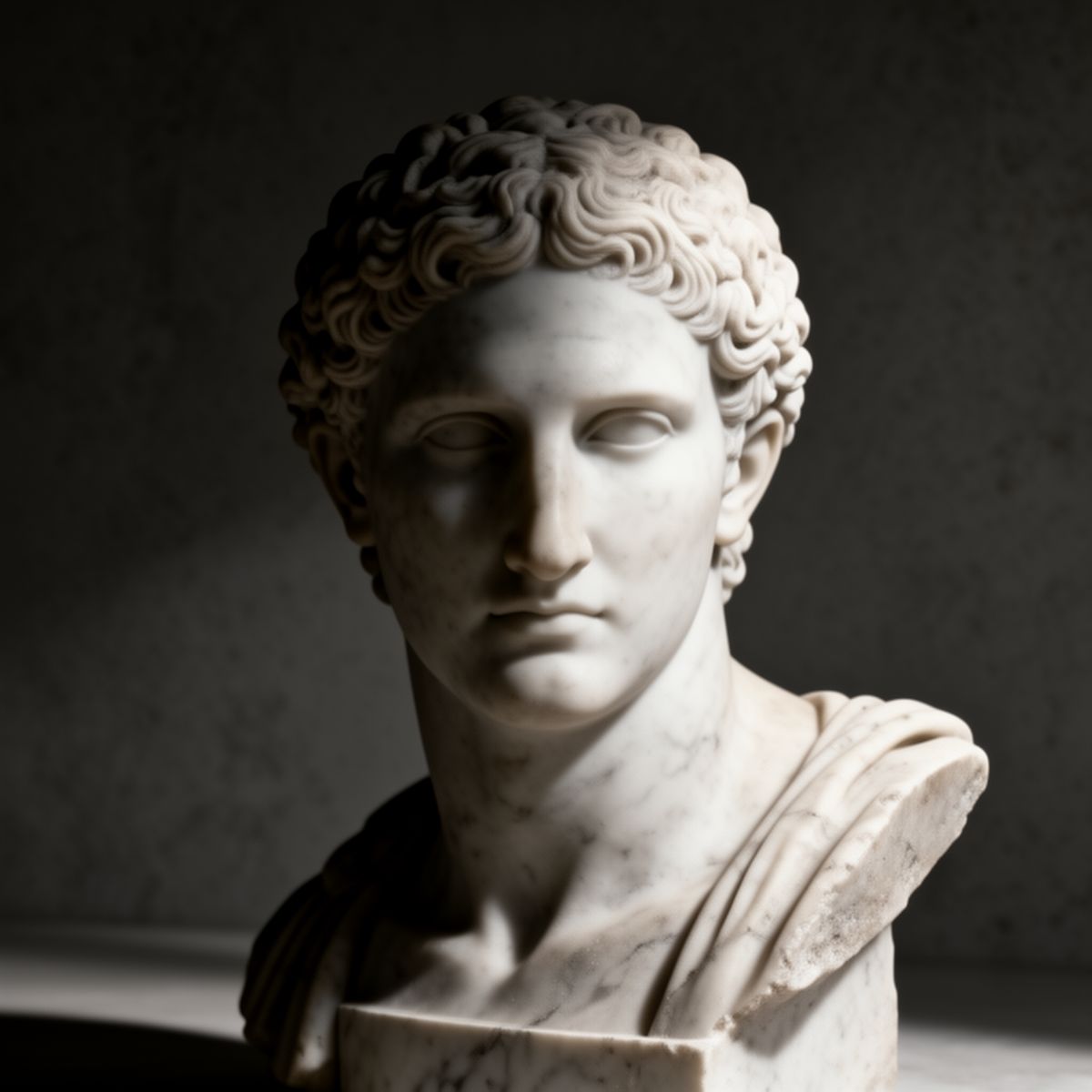

“You have nothing left. Gather your things. You leave for Corsica tonight.”
In 41 AD, Seneca went to sleep as one of the most powerful men in Rome. Senator. Orator. Advisor to emperors. Wealthy beyond measure. His name carried weight in every corridor of power.
He woke up a ghost.
Emperor Claudius, manipulated by his wife Messalina, who saw Seneca as a political threat, signed a single decree. Banishment. Not to a villa in the countryside. To Corsica. First-century Corsica was a barren, malarial rock in the Mediterranean. A place Rome sent people to be forgotten.
No Senate. No influence. No audience. No wealth he could use. No friends who dared write to him. Just rocks, silence, and the knowledge that the life he’d built had been erased overnight.
He was forty-four years old. He fully expected to die there.
For eight years, Seneca lived on that island. Eight years of exile, isolation, and irrelevance. The man who had commanded Rome’s attention couldn’t command a meal.
And in that silence, stripped of everything external, he wrote some of the most penetrating philosophy in human history.
Not letters begging for return. Not political schemes. Not bitter memoirs.
He wrote about how to live. How to use time. How to face death without flinching.
He wrote: “It is not that we have a short time to live, but that we waste a great deal of it.”
The Wealth That Can’t Be Exiled
Seneca lost his fortune, his status, his career, his freedom of movement, his reputation, his social world. Every single thing most men spend their lives building.
And it didn’t break him. It clarified him.
During those years of isolation, Seneca wrote a letter to his grieving mother, Helvia. In it, he revealed the exact psychological framework he used to survive. He called it the Flow of Fortune. Fortune, he argued, is perpetually unstable.
The wise man accepts its gifts with extreme hesitancy, fully prepared for their sudden and violent withdrawal. The fool clings to fortune’s gifts as if they were permanent.
The wise man holds them loosely, knowing they were never his to keep.
This wasn’t abstract theory. This was a survival mechanism forged on a malarial rock by a man who had lost everything and needed a framework to stay sane.
Rome took Seneca’s external life. It couldn’t touch the philosopher inside.
Nero, who would later become Seneca’s student and then his murderer, had palaces, harems, unlimited power. He spent his days performing on stage, demanding applause, burning through pleasures that never satisfied. He wasted every hour he had and died in terror.
Seneca, exiled on a rock, wasted nothing. Every hour was invested. Every thought was sharpened. Every day was used as if it were his last, because it genuinely might have been.
The man with nothing used his time better than the man with everything.
That’s the question you need to sit with.
The Mountain and the Pebble
Here is the uncomfortable truth about Seneca’s exile.
The Emperor’s decree was a mountain. Massive. Visible. Undeniable. It landed on Seneca’s life with the force of an imperial sledgehammer.
And because it was so enormous, so clearly catastrophic, his philosophical training activated immediately. He saw the mountain. He named it. He conquered it.
Your problem is not a mountain. Your problem is a pebble.
It is the slow, invisible bleeding of hours into scrolling you won’t remember. The accumulation of minor comforts that build nothing. The silent drain of distraction that never announces itself as a crisis because it never feels like one.
Seneca’s most famous essay, On the Shortness of Life, wasn’t written from comfort. It was forged in exile, by a man who understood exactly what it meant to have time taken from you, and who looked back at his years of power and realized he’d wasted more of them than Claudius ever stole.
He wrote that men guard their money, their property, their land with obsessive care, but throw away their hours as if they had an infinite supply.
Look at your own week.
How many hours bled into scrolling you won’t remember? Into arguments that changed nothing? Into worry about outcomes you can’t control? Into comfort that built nothing?
You’re not on a barren island. You have resources Seneca would have killed for. Access, tools, connection, freedom of movement.
And you’re wasting it.
Not because you’re lazy. Because the pebble never feels urgent. The mountain demands an immediate response. The pebble just quietly destroys you over years, one wasted hour at a time, until you look up and realize the life you meant to build was spent on things you can’t even recall.
If the answer unsettles you, good. That’s the island doing its work.
Discuss Stoicism with me.
Your Corsica
You don’t need to be exiled to learn what Seneca learned. But you do need to ask yourself his question honestly:
If everything external disappeared tomorrow, the career, the status, the validation, the comfort, would you still have something worth living on?
Before you answer too quickly, try this.
Take sixty seconds right now. Visualize the most disruptive loss you could face this week. A project collapses. A relationship fractures. A financial hit lands. Picture your immediate, default reaction: the tight chest, the spike in frustration, the urge to blame something external. Now, visualize yourself absorbing that exact information with total composure. Not indifference. Composure. You have just practiced what Seneca practiced every single day on Corsica. You have just robbed the external world of its power over your inner state.
That is the wealth no emperor can confiscate.
Seneca emerged from eight years of exile sharper, deeper, and more disciplined than the man who entered. He returned to Rome and became the most influential advisor in the empire. Not because Rome gave him his life back.
Because he’d built something on that island that Rome could never give or take.
Most men will never face exile. But every man faces a version of Corsica. The season where nothing’s working, where the external rewards dry up, where you’re alone with nothing but your own mind and your own standards.
That season will either reveal a foundation or an empty room.
What you build now, in the quiet hours no one sees, in the disciplines no one applauds, in the standards you maintain when there’s no reason to, that’s what you’ll have when your Corsica comes.
Seneca didn’t waste his exile. Don’t waste your freedom.
The hours are bleeding. You just haven’t noticed yet.
The Stoic Cult: The man with nothing who wastes nothing will always outlast the man with everything who wastes it all.
Other Reads:The Emperor’s Night Shift